If you handed me another bare two-acre lot tomorrow and enough money to develop it, I’d do it again.
Absolutely.
But I wouldn’t do everything the same way.
I’ve been involved with developing our property at Riverbed Ranch in Utah’s West Desert for about five years, although we’ve only lived in the house for about a year and a half. During that time, I’ve installed solar power, drilled a well, buried water tanks, built an underground pump house, planted a 33-tree orchard, put up two greenhouses, installed septic, run water lines around the property, and helped build a 2 bedroom, 1.5 bath, 876-square-foot house.
Some things worked very well.
Some things I’d never do again.
And a few things taught me that the order in which you build a homestead matters almost as much as what you build.
1. I Started With a Shipping Container
One of the first things I put on our property was a shipping container.
I dug holes, set concrete blocks, leveled them as best I could, and placed the container on top.
I’d do that again.
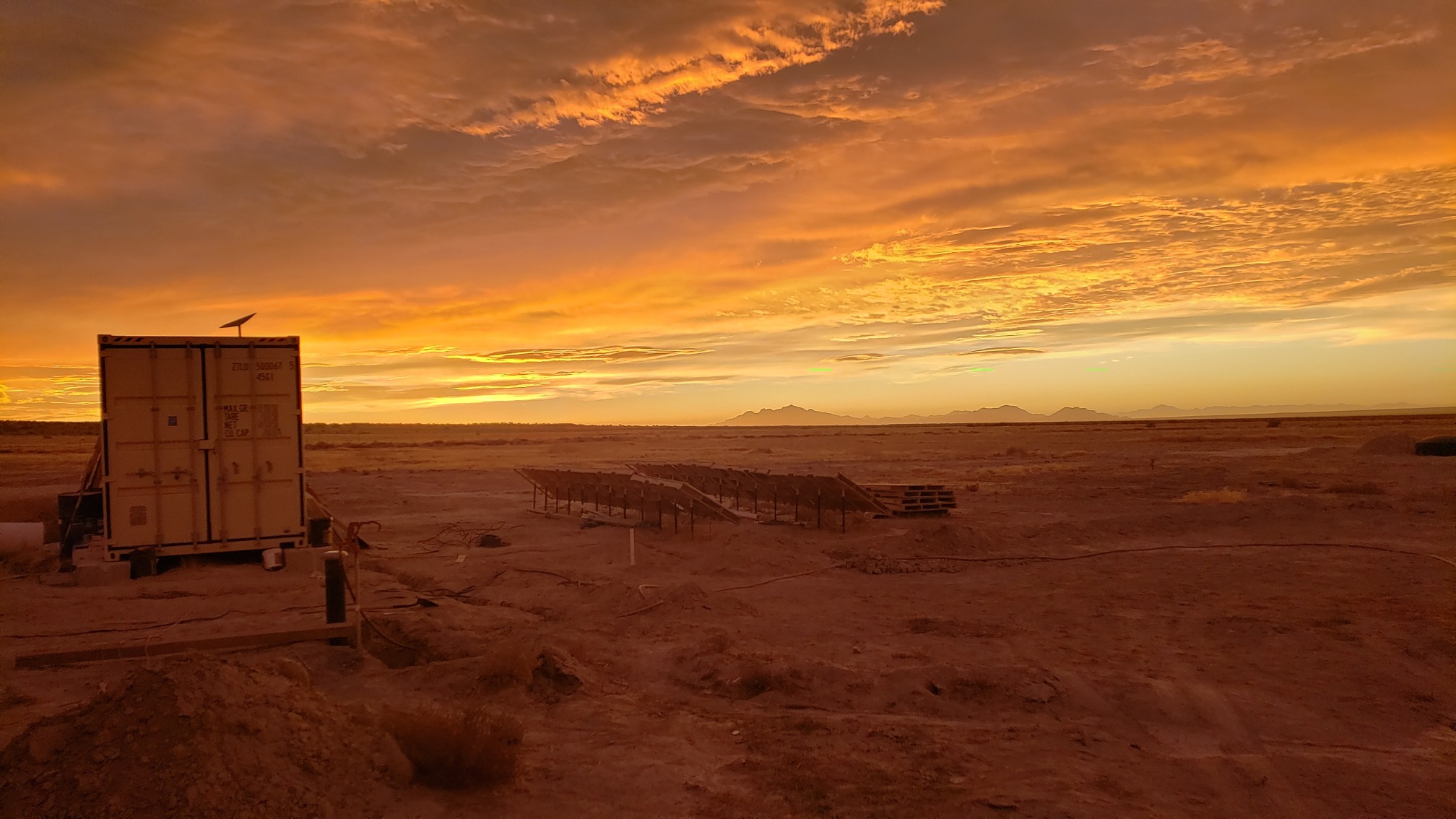
A shipping container gave us an immediate place to store tools, equipment, supplies, and all the things we were gradually moving out of our 3,200-square-foot home in town.
More importantly, it became a base of operations.
I could install workbenches. I could keep tools secure. And eventually I installed our inverter and batteries there and put up our first eight solar panels.
If I were starting over tomorrow, a shipping container would probably still be first.
But I would make one change.
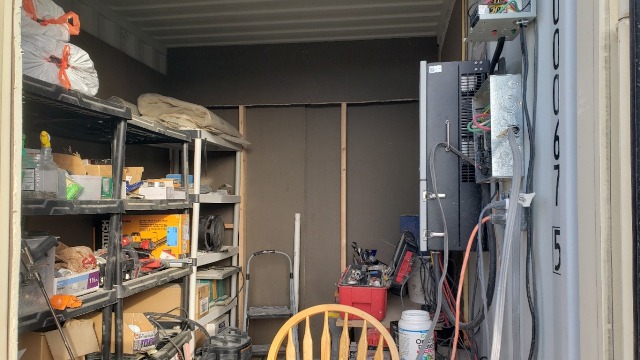
I mounted my inverter on the south wall inside the container.
In the Utah desert, the hot sun beats against the south side.
I wouldn’t do that again.
Next time, the inverter goes on the north wall.
2. Power Would Come Next
I spent a lot of money on our solar system.
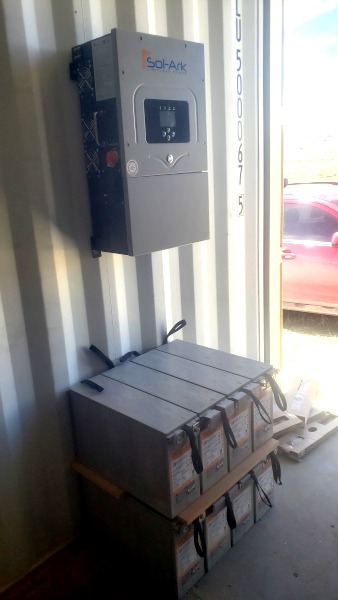
Today we have a top-of-the-line Sol-Ark 15K inverter, batteries, and solar panels. I originally thought buying top-of-the-line equipment was the prudent approach.
If I did it again, I’d think differently.
For roughly the same investment, I could have bought less-expensive equipment, more batteries, and multiple inverters.
That would give me something I value much more now:
Redundancy.
If one inverter failed, I’d have another.
I’d also buy more batteries than I thought I needed.
But I would absolutely install solar power near the beginning again.
Power makes everything else easier.
You can charge tools. You can run lights. You can operate equipment. The person who finished our house could power his construction tools.
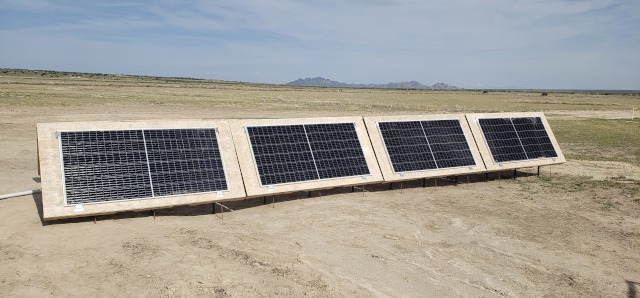
He could also run his ice maker.
He really likes his ice maker.
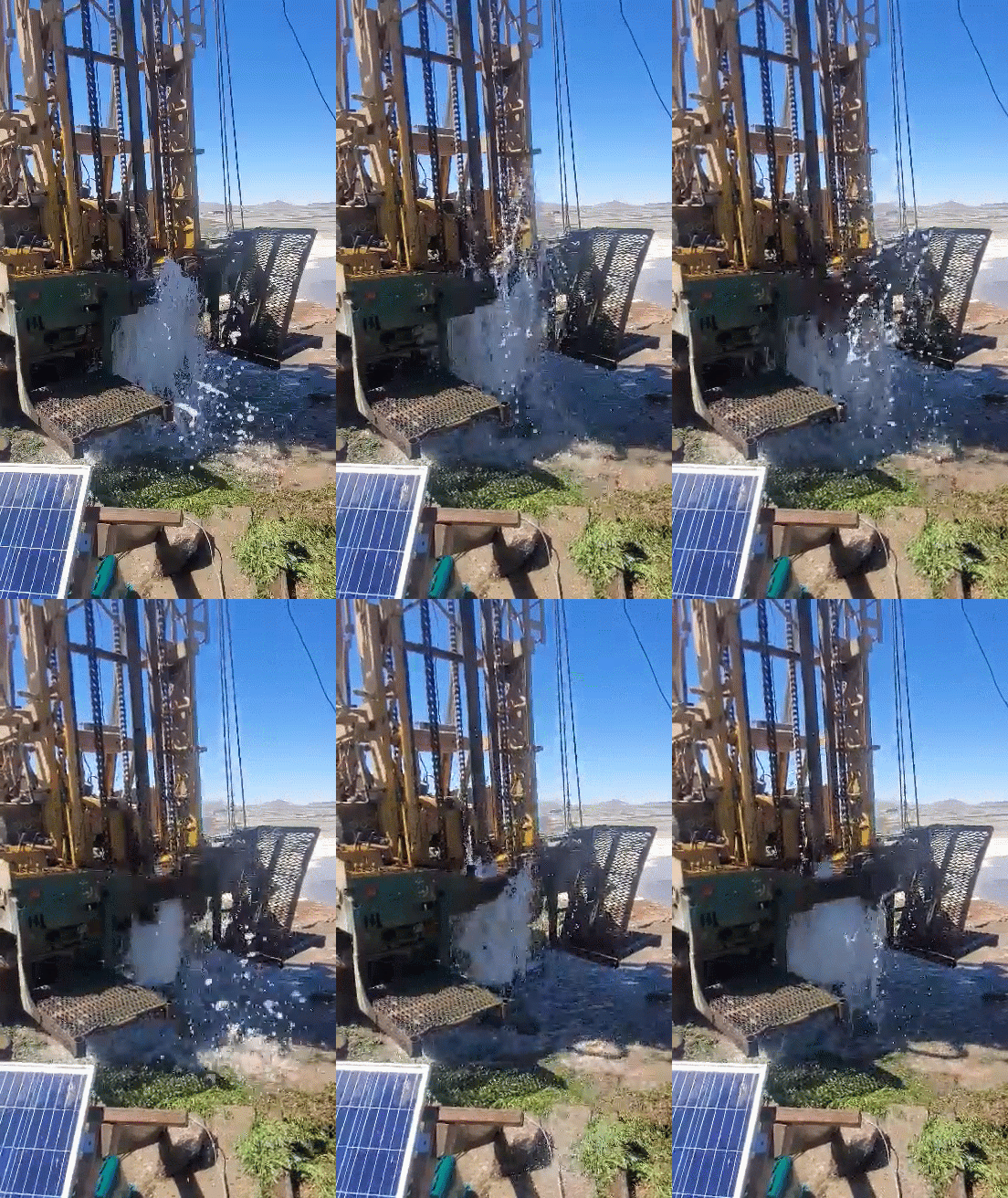
Once the well was drilled and connected to the solar system, I was thrilled turning it on and having water squirt out of a hose using power from the sun.
That was a big moment.
I remember thinking:
Now I can grow stuff!
3. Then Get Water
If you’re developing rural property, reliable water changes everything.
<= At Riverbed Ranch, we have an unusual advantage. The property was formerly an alfalfa farm, and several large agricultural wells were already there. Someone without a functioning private well can haul water from one of those sources.
But hauling water gets old quickly.
And if you’re developing an isolated 40-acre parcel somewhere without a community water source nearby, the problem gets much bigger.
So my basic sequence would be:
Storage. Power. Water.
But there is one important exception.
4. If You’re Living There, Septic Moves to the Front
The right order depends on your circumstances.
If I were developing another property while continuing to live somewhere else, I’d probably start with the shipping container, solar system, and well.
If I were moving onto the property in an RV, septic would become one of my first priorities.
There’s a simple reason.
Pooping in a bucket isn’t much fun.
We learned from other people’s experiences at Riverbed Ranch.
One early resident lived in an RV and initially dug a temporary septic arrangement that was too shallow. Winter arrived and it froze up.
I watched that experience and decided I wasn’t interested in repeating it.
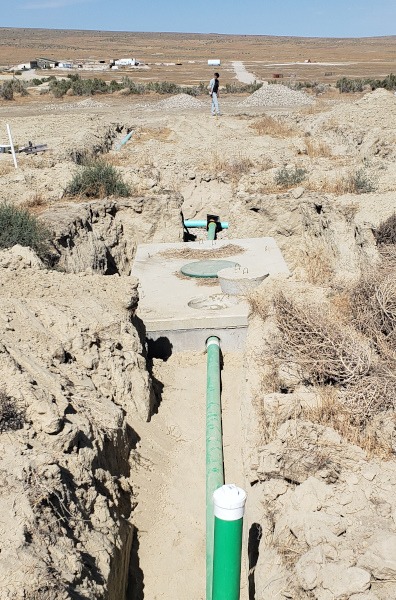
We installed a proper septic system.
I’m very happy with that decision.
Not every lesson on a homestead has to be learned personally.
In fact, that may be one of the most important lessons I’ve learned:
Whenever possible, let somebody else’s experience save you from making the same mistake.
5. The Season Matters Too
There isn’t one perfect construction sequence for everybody.
If someone were moving onto bare property in an RV in the spring, I’d probably recommend:
Septic → Solar → Well → Orchard → Greenhouse → House → Outdoor Garden
But if they arrived in the fall, I might change the first priority completely.
I’d want protection from the wind.
Winter winds in the Utah West Desert can make RV living considerably harder. Some people at Riverbed Ranch have built shelters around their RVs. Others have put an RV inside a greenhouse or similar structure.
A dedicated RV shelter can provide wind protection while also giving you room for shelves, tools, supplies, and equipment.
So there is no magic list.
You have to look at what problem can hurt you next.
6. Plant the Orchard Earlier Than You Think
Once the essential infrastructure is working, I’d get trees into the ground.
Trees take time.
You can build a garden bed next month. You can put up another structure next year.
You cannot tell an apple tree that you waited three years to plant it and would now appreciate it catching up.
The sooner the orchard is planted, the sooner it can contribute meaningfully to your food supply.
If I started over, I’d reserve orchard space strictly for food-producing trees.
Fruit trees.
Nut trees.
I wouldn’t use valuable orchard space for decorative trees. I can’t eat them.
I planted three fig trees in my orchard. If I were doing it again, I might replace those with smaller nut trees, perhaps hazelnuts.
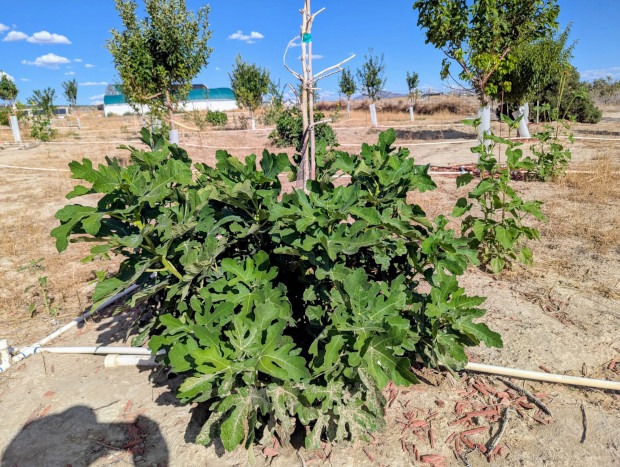
The figs can grow in the greenhouse, where they are easier to protect from our winters.
I have other areas where I can eventually grow trees for shade, wind protection, or even fuel.
But the orchard has one primary job.
Produce food.
7. I’d Still Build a Greenhouse, Just Not a Giant One
One of our greenhouses is about 16 feet tall.
Would I buy another one?
No.
Am I glad I have it now?
Actually, yes.
I’m growing fig trees and an olive tree inside it, and the height gives them plenty of room.
But assembling that greenhouse was a different matter.
I didn’t have ladders tall enough to reach some of the upper connections. At one point I rented a backhoe and my wife had to learn how to operate it well enough to raise me in the bucket so I could attach components near the top.
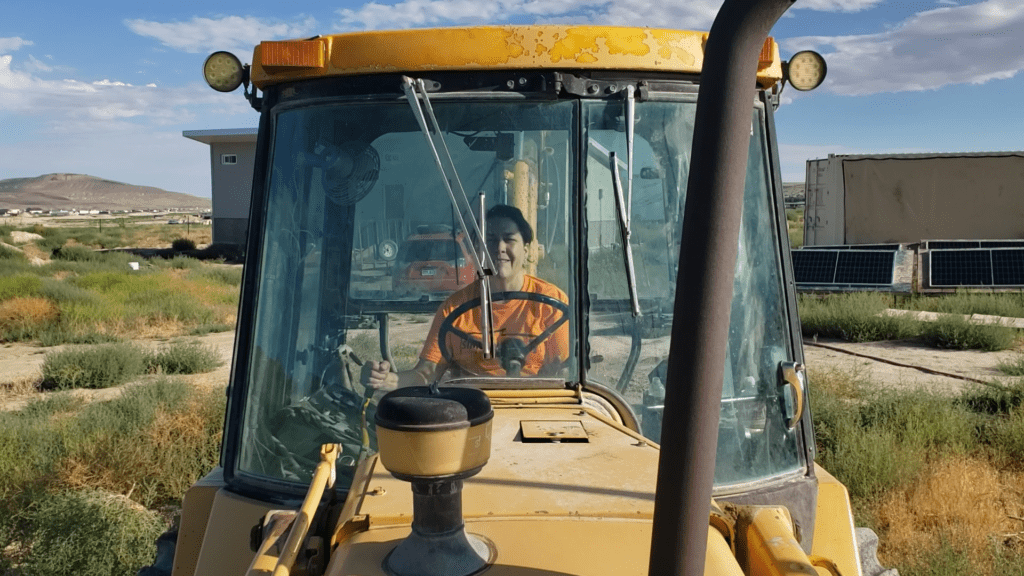
It was awkward and uncomfortable.
If I started over, I’d seriously consider buying used greenhouses rather than spending around $5,000 on another large kit.
For the same money, I might be able to put up three simpler greenhouses instead of two.
One might even cover a small fig tree grove.
I’ve become much more interested in how much productive capacity a dollar buys than whether I own the premium version of something.
8. I’d Never Build My Pump House This Way Again
If I could travel back to the beginning and give myself one piece of advice, it would be this:
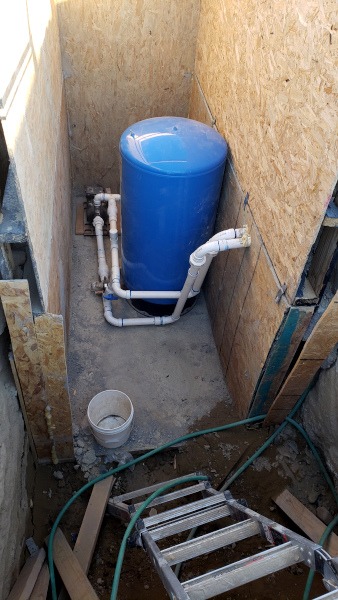
Put the pump house and at least the house water tank inside an above-ground building.
I buried two 2,400-gallon water tanks and built an underground pump house.
Then came Easter weekend.
The well pump was accidentally left running. Water flooded the underground pump house until there were several feet of water inside. The pressure tank floated.
I spent a cold and rainy Easter Sunday mucking it out.
Then I had to repair and repipe the water system.
It was miserable.
An underground pump house sounded reasonable when I built it.
After maintaining one, I see things differently.
Sometimes easy access and protection from flooding are worth paying for.
9. I’d Protect Every Buried Electrical Cable
Another lesson came courtesy of mice.
They chewed through electrical wiring associated with the well system.
If I started over, buried electrical cables would go inside protective conduit.
Period.
This is one of the strange things about building a homestead.
You can spend thousands of dollars on wells, pumps, tanks, inverters, and batteries, and then discover that a mouse has an opinion about your electrical design.
Plan accordingly.
10. And I Wouldn’t Use Rigid PVC That Way Again
I wanted water available throughout our property, so I installed a series of outdoor faucets positioned so that a 100-foot hose could reach most areas.
To connect them, I borrowed a large trencher from a neighbor and cut narrow trenches roughly three feet deep.
Then, for reasons I can no longer explain, I decided to assemble rigid 1.5″ PVC pipe at the bottom of those narrow trenches.
That was miserable.
You’re trying to reach several feet into a trench only a few inches wide and properly fit and glue pipe.
At one point a teenager helping me accidentally nicked the end of my index finger. Part of that finger is still numb years later.
My wife tried to help by reaching into the trench with her cheek against the ground.
An ant bit her.
There is probably a lesson in there somewhere.
Actually, I know exactly what the lesson is:
Before doing something you’ve never done before, explain your plan to somebody who has.
Today I would investigate an appropriate flexible water line that could be laid continuously through the trench rather than assembling rigid sections several feet underground.
A ten-minute conversation with somebody experienced in rural water systems might have saved hours of frustration.
11. I Would Build a Small House Again
Our previous home was about 3,300 square feet.
Our homestead home is 876 square feet. One fourth the size.
That was intentional.
When we were helping prospective homesteaders think through their plans, we often encouraged them to build the smallest house they could comfortably live in rather than exhausting their resources trying to build their dream house immediately.
That advice still makes sense to me.
Get into a functional house.
Preserve your capital.
If circumstances allow later expansion, you can consider it then.
The house being enclosed relatively early actually helped us. We could sleep on cots inside while working on other projects, and we could move appliances and fixtures inside in their boxes where they were protected.
So I don’t regret when we built the house.
But if I were starting again and already had an RV or another adequate place to live, I might put the permanent house surprisingly far down the list.
12.Comfort and Capability Aren’t the Same Thing
The pandemic reminded a lot of us that supply systems we rarely think about can be disrupted.

That reinforced something that already mattered to me.
I want the ability to produce food.
For me, that changes the priority of a homestead.
A comfortable house is wonderful.
But a house does not produce food.
An orchard does.
A greenhouse can.
A garden can.
Reliable water makes all three possible.
That doesn’t mean I expect catastrophe tomorrow. It means I value productive capability enough to build it before some of the comforts I might otherwise choose.
If necessary, I can live temporarily in an RV.
I could even sleep in a tent protected inside a greenhouse.
But I cannot plant an orchard after I need mature fruit trees.
13. The Biggest Mistake Comes Before Construction
After watching families attempt this lifestyle, I think the biggest mistake may happen before anyone drills a well or pours concrete.
They start without a realistic financial plan.
Bare land can look like self-reliance.
It isn’t.
Land is the platform on which you can build self-sufficiency.
Reliable water costs money. Power costs money. Septic costs money. Shelter costs money. Tools, fencing, pumps, pipes, greenhouses, trees, repairs, and all the things you didn’t know you needed cost money.
We were fortunate.
We sold our previous home at a favorable time and had enough resources to build a relatively conservative homestead without having to stop after every project and wait for more money.
Not everyone has that opportunity.
That doesn’t mean someone needs to be wealthy to homestead.
It does mean the numbers need to work.
Buying rural acreage with no realistic means of developing it can leave someone owning land without having the systems necessary to live there safely or productively.
I would rather own less land and have enough resources left to make it functional.
14. Learn Before You Dig
Looking back, I don’t think our original sequence was terribly wrong.
In fact, much of it worked.
One reason is that we learned from people who started before us.
We watched generators fail in our dusty environment.
We watched a temporary septic system freeze.
We saw other people solve problems before we encountered them ourselves.
Where I listened to those lessons, I often saved myself trouble.
Where I charged ahead without asking someone experienced, I sometimes ended up three feet down in a narrow trench trying to glue PVC together.
That may be the biggest thing I would do differently if I started over.
Not the shipping container.
Not the orchard.
Not even the pump house.
I would ask more questions before making decisions that are difficult or expensive to undo.
There is no prize for inventing every solution yourself.
If your neighbor already learned the lesson the expensive way, buy him lunch and ask what happened.
Then go build yours better.
15. Would I Do It Again?
After everything I’ve learned, would I build another homestead?
Absolutely.
But there’s a catch.
I’d have to have an awful lot of money, because this time I’d hire somebody else to do the work.
I’ve dug enough trenches. I’ve operated enough backhoes. I’ve wrestled enough pipe. I don’t have any particular desire to prove that I can do it all again.
What interests me is the opportunity to build a second homestead using what I know now.
I’d design the water system differently. I’d build more redundancy into the solar system. I’d protect the buried electrical lines. I’d use shorter, less-expensive greenhouses. I’d get the orchard growing early. And I’d ask experienced people to look over my plans before making expensive decisions that are difficult to undo.
I think I could build a more efficient and effective homestead the second time around.
But I don’t need another one.
I’m satisfied that the homestead we’ve built can serve us just fine. It isn’t perfect, and there will always be another project waiting.
That’s okay.
Because after all the mistakes, repairs, experiments, and lessons, there is something I know every time I turn toward Riverbed Ranch and head for home:
I truly love coming home to it.
Leave a Reply