When I put up my first greenhouse, I had a fairly simple expectation: I thought I could keep it from freezing during the winter.
I wasn’t expecting tropical temperatures in January. I just wanted to keep the temperature above 32 degrees so I could extend our growing season and protect plants through the winter.
I even planned ahead for it.
Then our first Utah winter arrived.
I Thought the Water Barrels Would Do It
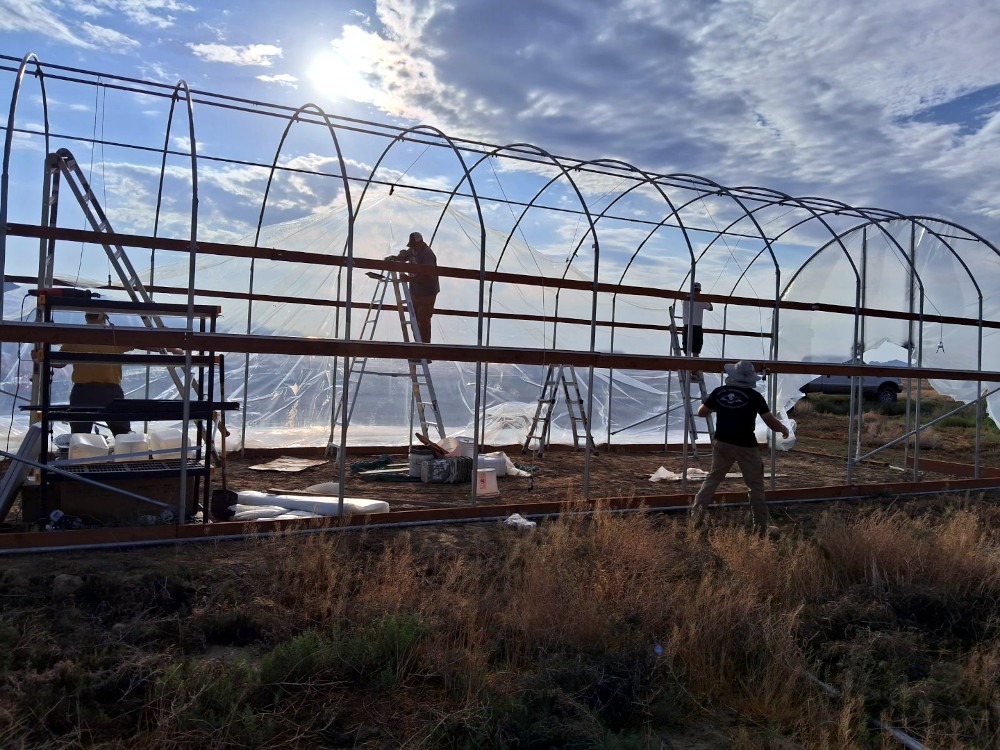
Our greenhouse came as a kit from Tennessee. It was designed to be 16 feet wide, 48 feet long, and 16 feet tall. I didn’t drive the supporting poles completely into the ground, so ours ended up closer to 17 feet tall.
It is covered with the greenhouse plastic supplied with the kit.
Knowing that the greenhouse would need help retaining heat overnight, I placed a couple dozen barrels filled with water inside.
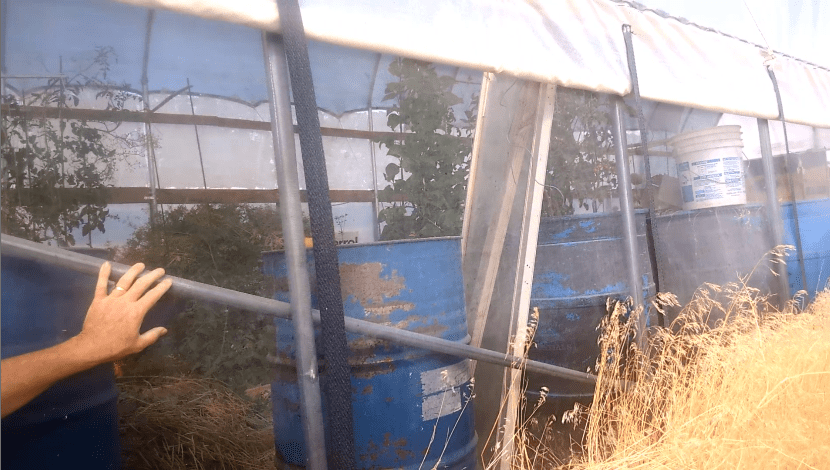
The idea was thermal mass.
Water warmed by the sun during the day stores some of that heat and releases it as temperatures fall at night. I hoped all those barrels would provide enough stored heat to carry the greenhouse through cold nights without freezing.
It sounded good.
It just wasn’t enough.
When outside temperatures dropped into the 20s, the temperature inside the greenhouse wasn’t far behind.
The Plants Gave Me the Answer
Plants that weren’t capable of overwintering in our climate died.
The hardy plants told a different story. Kale and some lettuces survived just fine.
That helped change how I thought about the greenhouse.
It was certainly providing protection. It was extending our growing season and creating a much more favorable growing environment during other parts of the year.
But a greenhouse extends the season. It doesn’t automatically create a warm winter climate.
That was a distinction I hadn’t fully appreciated.
So I Tried Adding More Heat
The next step was experimentation.
At one point I tried the old idea of burning a candle underneath a stoneware planter overnight. It didn’t make a noticeable difference.
As I found room, I added another two or three water barrels. That didn’t seem to make much difference during our second winter either.
Then I tried something different.
I bought these garden hoops and placed covers over some of the plants inside the greenhouse.
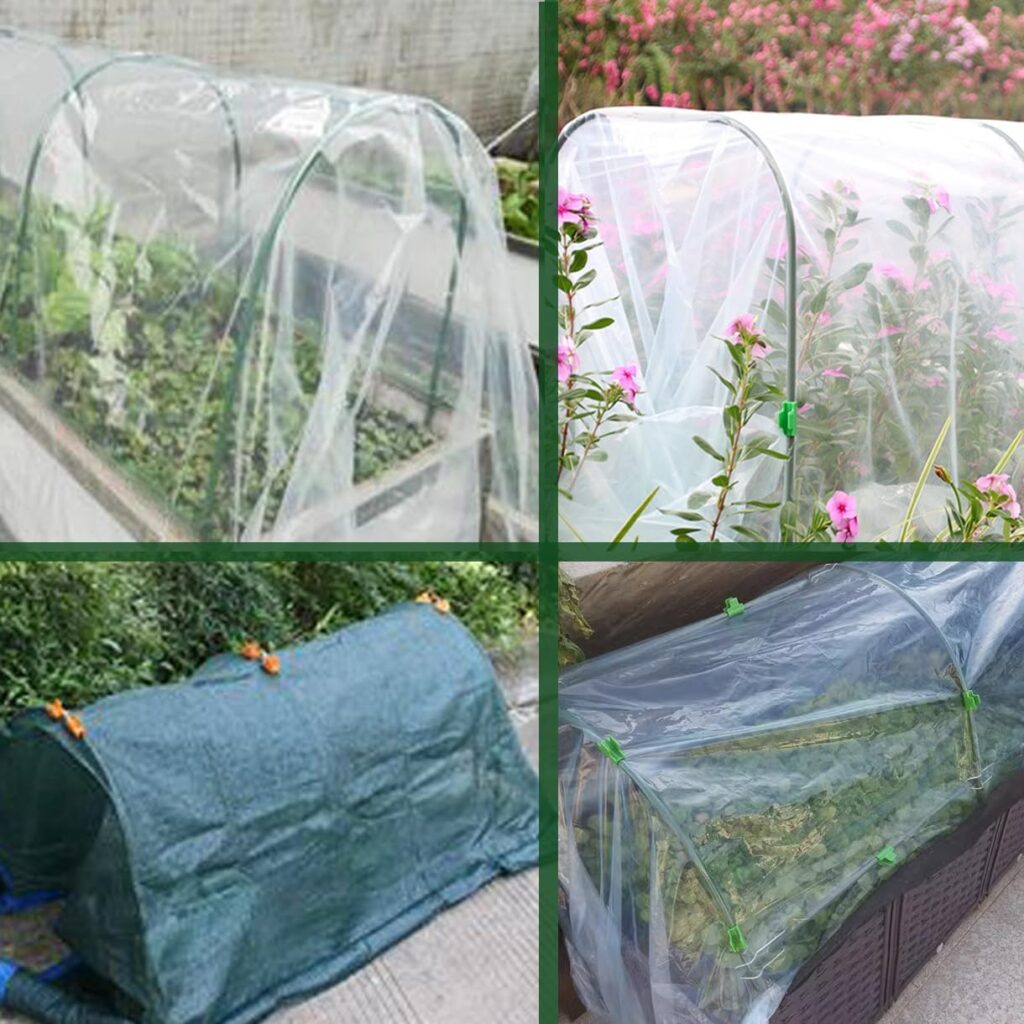
I didn’t keep good enough records to tell you exactly which plants received the additional protection, so I don’t want to claim results I can’t document. But my recollection is that those covers were beneficial.
And that makes sense from a practical standpoint.
Instead of trying to keep nearly 7,000 cubic feet of greenhouse warm, I was creating a much smaller protected environment immediately around the plants.
I’ll be doing more of that this coming winter.
Is My Greenhouse Too Tall?
I’ve wondered whether the height of our greenhouse works against us during the winter.
Warm air rises, and at 17 feet tall, there’s a considerable amount of space above most of our vegetables.
But I’ve also learned that height has advantages.
I’ve planted three fig trees and an olive tree in this greenhouse, with vegetables growing around them. Having all that vertical space gives those trees room that a short greenhouse simply couldn’t provide.
My wife and I later built a second greenhouse that tops out at only about 10 feet on one end.
Interestingly, the shorter greenhouse has been harder to keep cool during the summer. I’m not completely sure why, so I’m not going to pretend that I know.
That’s another experiment still in progress.
The lesson for me isn’t necessarily that tall greenhouses are bad or short greenhouses are better.
It’s that greenhouse design involves tradeoffs, and those tradeoffs need to match what you’re trying to grow and the climate where you’re trying to grow it.
A Greenhouse Designed for Tennessee Isn’t Necessarily Designed for Utah
This may be the biggest lesson I’ve learned.
There was nothing necessarily wrong with the greenhouse kit we bought. But it came from Tennessee.
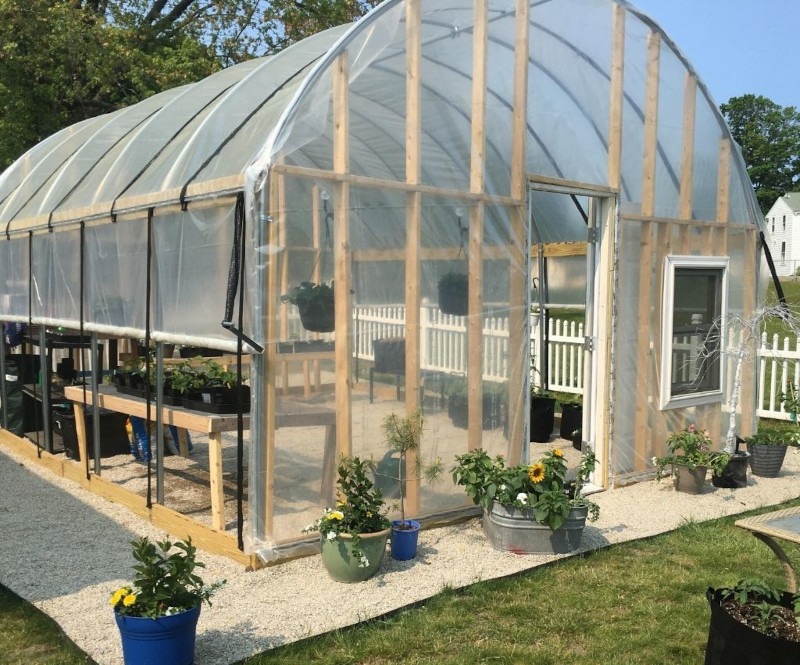
We put it in Utah’s West Desert.
Those are very different environments.
Our winters can be harsh, and simply putting greenhouse plastic between the plants and the outside air wasn’t enough to create the winter growing environment I originally envisioned.
If I were starting over with winter growing as a major goal, I would pay much more attention to insulation and heat retention from the beginning.
And I’ve found a fascinating example of someone doing exactly that right here in Utah.
Growing Citrus in a Utah Winter
Utah farmer Chad Midgley has taken greenhouse growing much further than I have.
He has been experimenting with ways to grow citrus in northern Utah and has successfully grown grapefruit, oranges, kumquats and other normally warm-climate crops in his greenhouses.
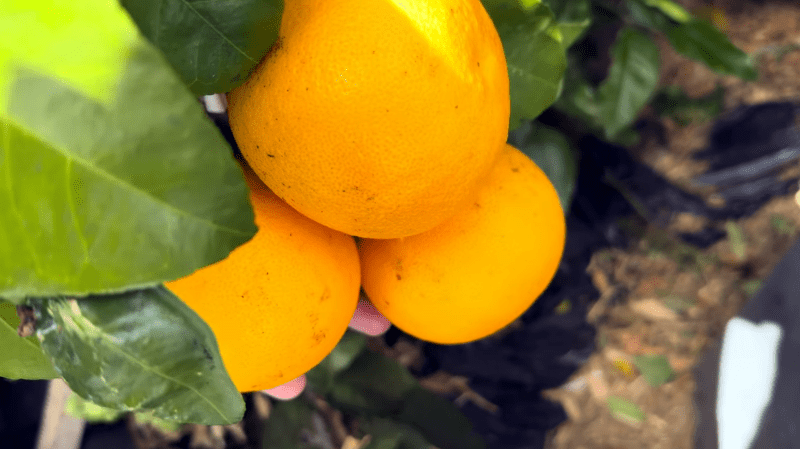
His approach is very different from simply putting up a single layer of greenhouse plastic and hoping the sun does the rest.
Among the techniques he uses are multiple layers of plastic, water for thermal mass, and large amounts of composting material incorporated around the greenhouse inside the outer layer of plastic (as seen below). The decomposition of that organic material produces heat.
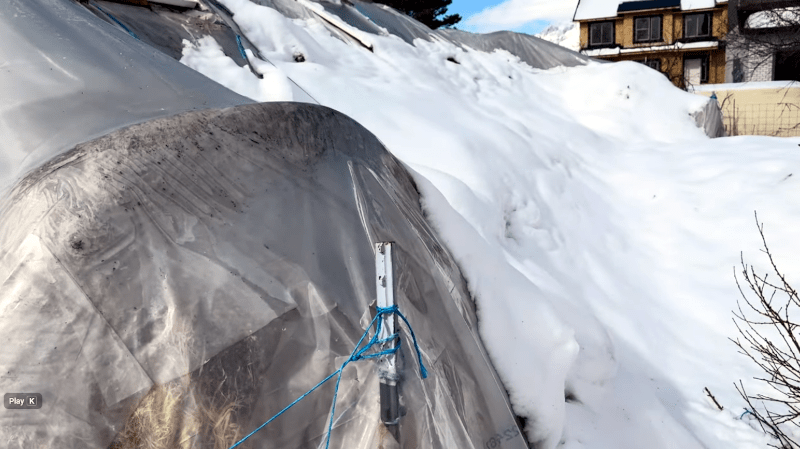
In other words, he is attacking the winter problem from both directions: retaining heat and producing heat.
I’ve watched a number of Chad’s videos, and some of my neighbors have toured his operation. I haven’t personally toured it yet, so I can’t offer firsthand observations about his system.
But I have seen enough to know that I want to learn from what he’s doing.
His results also demonstrate something important: growing warm-climate plants through a Utah winter isn’t necessarily impossible. It simply requires a greenhouse designed around that objective.
What I’ll Do Differently This Winter
I’m not tearing down my greenhouse.
Far from it.
It has been useful, and those 17-foot ceilings now have fig and olive trees growing beneath them.
But I’m adjusting my expectations and my methods.
This winter I expect to concentrate primarily on vegetables that are naturally winter hardy. I’ll also use more hoops and row covers inside the greenhouse to create smaller protected environments around the plants.
And I’ll continue learning from people who have found ways to capture, retain, and generate heat without simply throwing large amounts of electricity or fossil fuel at the problem.
Eventually, I may incorporate more of those ideas into our own greenhouses.
That’s part of becoming more self-reliant.
You try something. You observe what actually happens. You admit when your assumptions were wrong. Then you learn, adjust, and try again.
My first greenhouse taught me a lesson I probably should have understood before we ever put it up:
A greenhouse extends the season, but it doesn’t automatically create a warm winter climate.
And a greenhouse designed for Tennessee doesn’t necessarily cut it in the harsh weather of Utah’s West Desert.